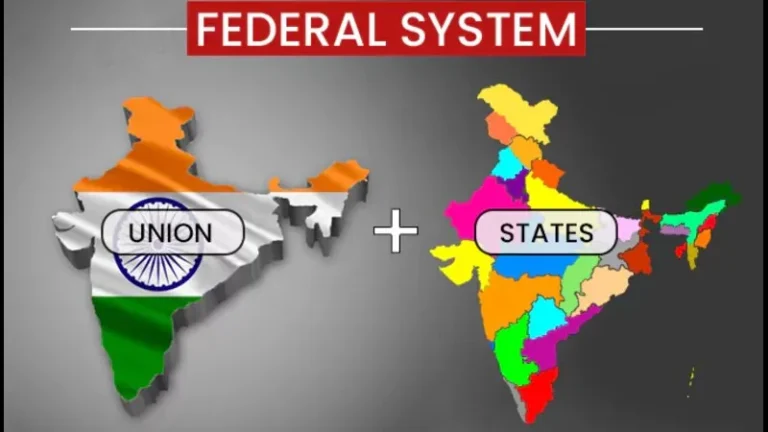

India, the world’s largest democracy, follows a federal system of governance established under the Constitution of India, which carefully distributes powers and responsibilities between the Central Government and the State Governments in order to maintain national unity, democratic administration, and regional autonomy across the country. Through constitutional mechanisms such as the Union List, State List, and Concurrent List, the Indian Constitution ensures that both levels of government can function effectively while addressing national interests and local needs.
The federal structure of India plays an important role in protecting democratic values, promoting political participation, managing the country’s vast cultural and regional diversity, and preventing the concentration of power within a single authority. While the Central Government is responsible for matters of national importance such as defense, foreign affairs, and currency, State Governments manage local matters including public health, agriculture, police, and local administration.
This article examines the constitutional framework of power sharing between the Centre and the States in India, the importance of cooperative federalism, and the role of constitutional institutions in maintaining balance within one of the most diverse democratic systems in the world.

#India #IndianConstitution #Federalism #Democracy #PowerSharing #Governance #HumanRights #Politics #BDI