Democratic processes and institutions cannot be considered complete or effective when the root causes and consequences of inequality, exclusion, and marginalization remain unaddressed. A democracy that fails to include all people risks becoming partial, unequal, and disconnected from the needs of society. True democracy must ensure that every citizen has equal access to participation, representation, and decision-making regardless of gender, ethnicity, age, disability, identity, or social background.
For democratic institutions to remain legitimate and resilient, barriers that prevent different communities from exercising their political rights must be removed. Structural discrimination, violence, unequal access to education, poverty, and exclusion from leadership continue to limit the participation of women, youth, minorities, displaced persons, and other historically marginalized groups across the world.
Building an inclusive democracy requires more than elections alone. It requires laws that protect equality, institutions that represent diversity, and public systems that empower participation. Political inclusion must be supported through civic education, leadership development, policy reform, and spaces where underrepresented voices can shape the future of their societies.
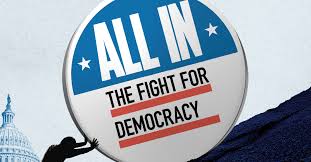
Women’s political participation remains especially important. Although progress has been made countly, women continue to face unequal access to leadership, political violence, and discriminatory norms. Youth participation is equally essential, as younger generations bring innovation, energy, and long-term vision to democratic reform. Democracy becomes stronger when women and youth are not only voters, but leaders and decision-makers.
Digital platforms, educational tools, leadership networks, and global cooperation can also help advance inclusion. When knowledge, training, and opportunities are shared, communities that were once excluded can become active contributors to national progress.
For countries undergoing democratic transition or seeking federal reform, inclusion must be a central principle. A democratic future cannot be built by leaving segments of the population behind. It must be built through equal citizenship, shared opportunity, and representative institutions that serve all people.
Democracy can only succeed when it belongs to everyone. Political systems that exclude women, youth, minorities, displaced persons, or marginalized communities cannot fully represent the people. BDI believes that equality, inclusion, and broad participation are essential foundations for building a peaceful, federal, and democratic future in Myanmar. True democracy means no one is left behind.