
Every four years voters in Switzerland elect politicians to represent them in the Swiss capital, Bern. This is how the Swiss parliament is structured.
Switzerland has a legislative branch with two chambers: the House of Representatives and the Senate. The House has 200 seats divided among the 26 cantons in proportion to their populationExternal link.
Canton Zurich, with 1.5 million inhabitants, has 35 seats, while the six smallest cantons have one seat each. Issues important to small cantons tend to be overruled in parliament by issues important to the larger cantons.
So the Swiss found a way to better balance the interests of the majority of the Swiss and of those living in less-populated regions. They made a second chamber: the Senate, with 46 seats. Most cantonsExternal link have two seats here.
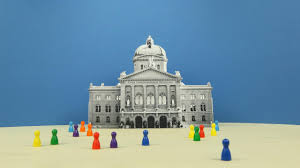
New legislation or changes to a law need approval by both chambers. The United States has a very similar system but on a larger scale.
Who can vote in Switzerland? Who can’t?
You can find an overview of ongoing debates with our journalists here.
Switzerland shows that a successful democracy is built not only through elections, but through constant citizen participation, shared power, and accountable institutions. Its federal election system proves that unity can be preserved while protecting regional autonomy and the voice of the people. For Burma’s future, Switzerland provides a meaningful example of democratic federalism in practice.